
FOR IMMEDIATE RELEASE
June 15, 2026
Courtney Sale Ross, 1948–2026. Malibu, California
Courtney Sale Ross, education innovator and visionary, founder of Ross School, and award-winning filmmaker, died on June 1, 2026, in Malibu, California. She left this life in the early morning hours, peacefully with her daughter, Nicole, by her side. She leaves behind a legacy of pioneering spirit, generosity, and great accomplishment.
Courtney’s family arrived in Texas in the nineteenth century. Some arrived before statehood, most by wagon trains and overland stagecoach. Her father, Elbert B. (Chic) Sale, was from an early West Texas ranching family, still remembered today for award- winning Hereford cattle, which eventually replaced the wilder Texas longhorns and improved the bloodlines of earlier strains of cattle. The ranch remains under family ownership today. Courtney’s mother, Gloria Stephan Sale, was the third generation in a family of Coca-Cola bottlers. (Her grandfather Louis Stephan contracted with The Coca- Cola Company in Atlanta, Georgia in 1907.) Both of her lineages produced individuals of fortitude, imagination, and tenacity; qualities that expressed themselves in Courtney. Through her forebears, she inherited resilience, perseverance, and a love and reverence for beauty.
She spent a happy childhood in Bryan, Texas, where she was born on March 12, 1948, growing up with laughter shared among friends, horseback riding, Friday football games, and church on Sundays at St. Andrew’s Episcopal Church. She graduated from The Holton Arms School in Bethesda, Maryland, and Skidmore College in Saratoga Springs, New York.
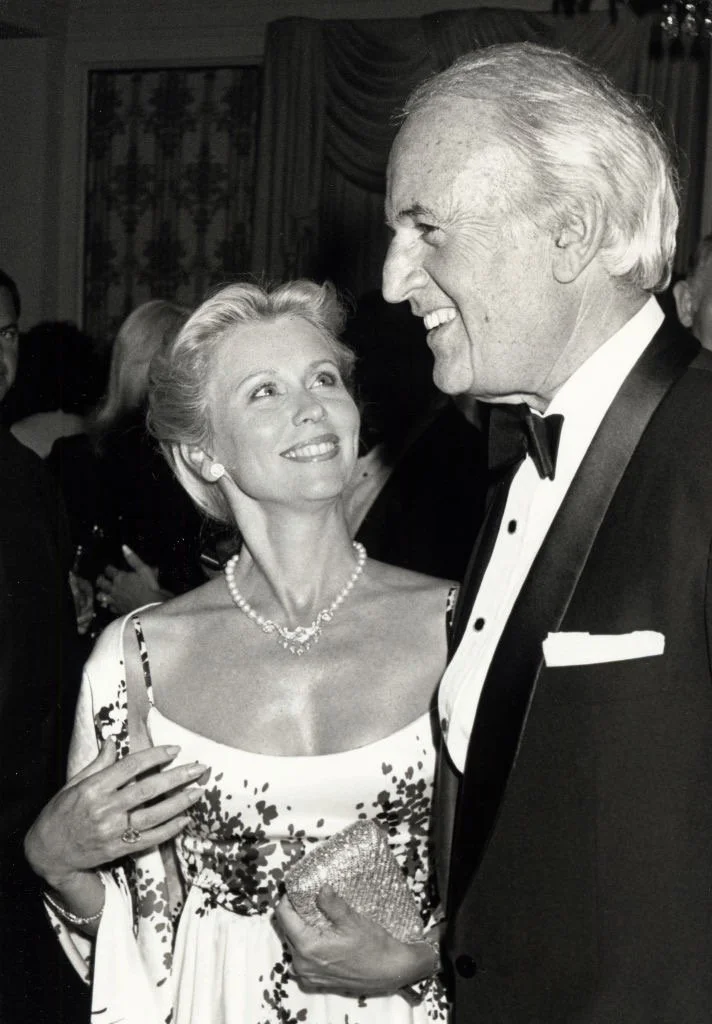
Photo credit: Getty Images / Ron Galella
Upon her return to Texas after graduating from Skidmore, Courtney entered the art scene in Dallas, opening an art gallery in the 1970s. Within a few years, her talents, art expertise, and interest in filmmaking took her to New York. Still involved in gallery exhibition, she established herself as a pioneering art curator. At the request of then-New York Governor Hugh Carey, a major proponent of public art and historic preservation, Courtney curated a celebrated exhibition of public works, breaking with the tradition of presenting art in chronological order.
In 1982, through mutual friends, Courtney met her beloved husband, Steven Jay Ross, Chief Executive and Chairman of Warner Communications, which later became Time Warner. Drawn together in part by a shared love of art and collecting, together they walked into a world in which Courtney was already fluent. In 1982, they married in a ceremony at the Plaza Hotel in New York City, and in June 1983, they welcomed their daughter, Nicole.
Following a keen interest already well-developed, she turned her attention to film, ultimately becoming an award-winning documentary filmmaker. She produced Listen Up: The Lives of Quincy Jones (1990), a feature-length portrait of the composer and producer. Earlier work included the art documentary Strokes of Genius (1984), which had its nascence in meeting many of the twentieth century’s legendary abstract expressionists. The film series explored the creative process, philosophy, and studio habits of working artists, including Willem de Kooning and Elaine de Kooning, Jackson Pollock, and Franz Kline, which later led her to education.
With Steve’s encouragement, Courtney pursued her love of art and film, and in turn, she introduced Steve to the art world. Together, they curated a renowned modern art collection. They traveled the world, became increasingly devoted supporters of the arts, and realized a shared vision for exemplary education, which was manifested by the creation of Ross School. Across their ten years of marriage, some of their happiest times were spent at Cody House in East Hampton, New York, with Nicole.
In 1991, Courtney and Steve founded a small day school for Nicole and a handful of her friends, inspired in part by Nicole herself and by the learning academies of the past. After Steve died in 1992, the year after the school opened, Courtney carried their shared vision forward for the next three decades. Visionary, trailblazer, and muse, she fused her own deep immersion in the arts with Steve’s command of communications technology to invent a holistic educational model: a global study of the past to illuminate the present and engage the future. Through her ideas and her tireless efforts to recruit the best available teaching faculty, what we now know as Ross School grew into a co-educational day and boarding school serving students from early childhood through grade 12, drawn from more than 20 countries, and became an internationally influential model for 21st-century learning. At the heart of her work was a conviction that education must prepare children for a future that will demand more of them than the past.
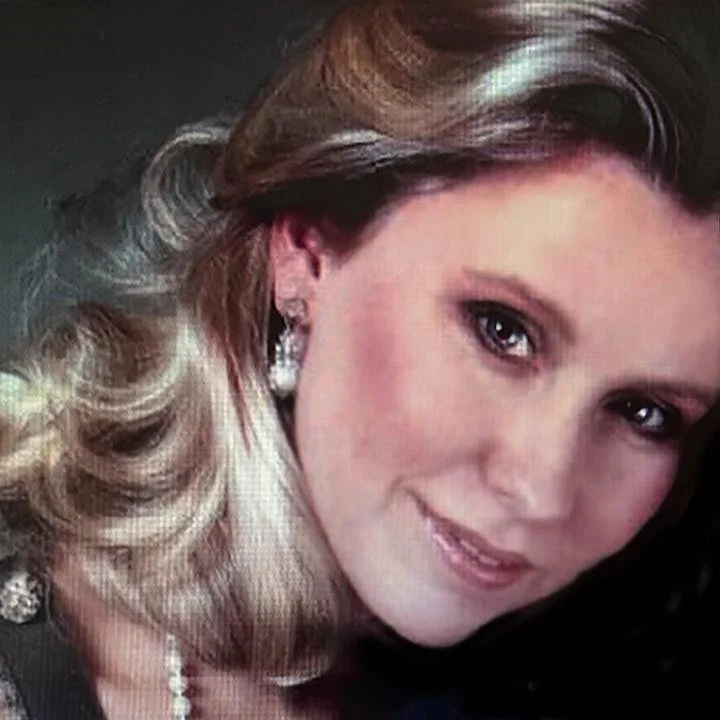
Photo credit: Mary Ellen Mark
As founder and chair of the Ross Institute and its laboratory school, Courtney developed the Ross Learning System and, in 1995, pioneered the K–12 Ross School Global Spiral Curriculum, an experiment she described as “educating the whole child for the whole world.” Students studied the eras of cultural history chronologically, from grades 3 through 11, and thematically within each grade, learning the art, literature, cultural history, science, mathematics, and technology of each civilization in the interdisciplinary context in which it emerged. “It makes sense to learn this way!” became a common refrain among her students. Courtney personally designed the Grade 12 curriculum as a recapitulation of the Spiral, with a focus on art history and culminating in Senior Projects built around each student’s passions, while a yearly Faculty Summer Academy on topical issues secured the curriculum’s continual renewal. The book Educating the Whole Child, about her approach to education, drew praise from figures including Quincy Jones, Oprah Winfrey, and the Nobel laureate physicist Leon Lederman.
As the school grew, Courtney worked closely with its builders to ensure that the design itself supported the curriculum. With a nod to the theory of multiple intelligences and to her own artistic genius, she installed curriculum-specific art and artifacts throughout the campus, making them an essential part of Spiral learning. She often called the school an “incubator,” and the programs she originated in the 1990s were widely imitated and adapted. Embodying the school’s motto, “Know Thyself in Order to Serve,” the Ross Wellness program brought together contemplative practices, community-service projects, and Core Values reinforced through faculty advising and mentorship, annual international travel, and service to others.
As public recognition and praise for the Ross School arrived with its first graduating class in 2001, Courtney’s influence reached well beyond East Hampton. Global and local in both vision and action, she adapted the model internationally, establishing public schools in Stockholm, Sweden, and ventured into New York City public education, founding one of the only charter schools with an open-admissions lottery. The institute’s methods further informed museum education in Shanghai and programs connected to the United Nations. She served as a board member or adviser to institutions including the Asia Society, New York University, the Harvard Graduate School of Education, the Brain and Creativity Institute at the University of Southern California, and the United Nations Association of the United States. She was named Honorary Chair of a Pontifical Academy of Sciences workshop on children and sustainable development, and in 2016, she received the inaugural UCLA Global Citizen Award.
Courtney built a devoted community that trusted the school to fulfill its mission: “to change the way education meets the future, foster interdisciplinary thinking and innovative leadership, engage fully in the global community, and facilitate lifelong learning.” By exemplifying these precepts, its graduates continue to honor the gifts she so magnanimously bestowed.
In 2018, after 27 years leading the school, she stepped back from day-to-day involvement to become a trustee emeritus, marking the transition with a celebration she likened to her own “graduation.” She spent her final years surrounded by her three grandchildren, who followed her to Malibu, California, in 2020.
Courtney was preceded in death by her husband, Steve, and her parents, Chic and Gloria.
She is survived by her beloved daughter, Nicole, her three grandchildren, Kitt, Benji, and Sadie; her sisters Stephanie and Lynsey, and her nieces and nephews Alexis, Maine, Zachary, Cheney, and Siri.
She will be remembered as a woman of creativity and generosity, a pioneer and visionary. A celebration of Courtney’s life will be announced in the future. In lieu of flowers, her family requests that donations be made to Ross School, 18 Goodfriend Drive, East Hampton, NY 11937.
The photos above are available for publication. Download here.
Photo 1: Photo credit: Getty Images / Ron Galella
Photo 2: Photo credit: Mary Ellen Mark
Media contact: communications@ross.org.